10 Things to Check Before Choosing a Global Supplier
Choosing the right supplier is one of the most important decisions in global trade. Learn the ten critical factors every business should evaluate before partnering with an international manufacturer or supplier.
10 Things to Check Before Choosing a Global Supplier
Finding a supplier is easy. Finding the right supplier is much harder.
Whether you're importing products for the first time or expanding your supply chain internationally, choosing the wrong supplier can result in delays, poor product quality, unexpected costs, and dissatisfied customers.
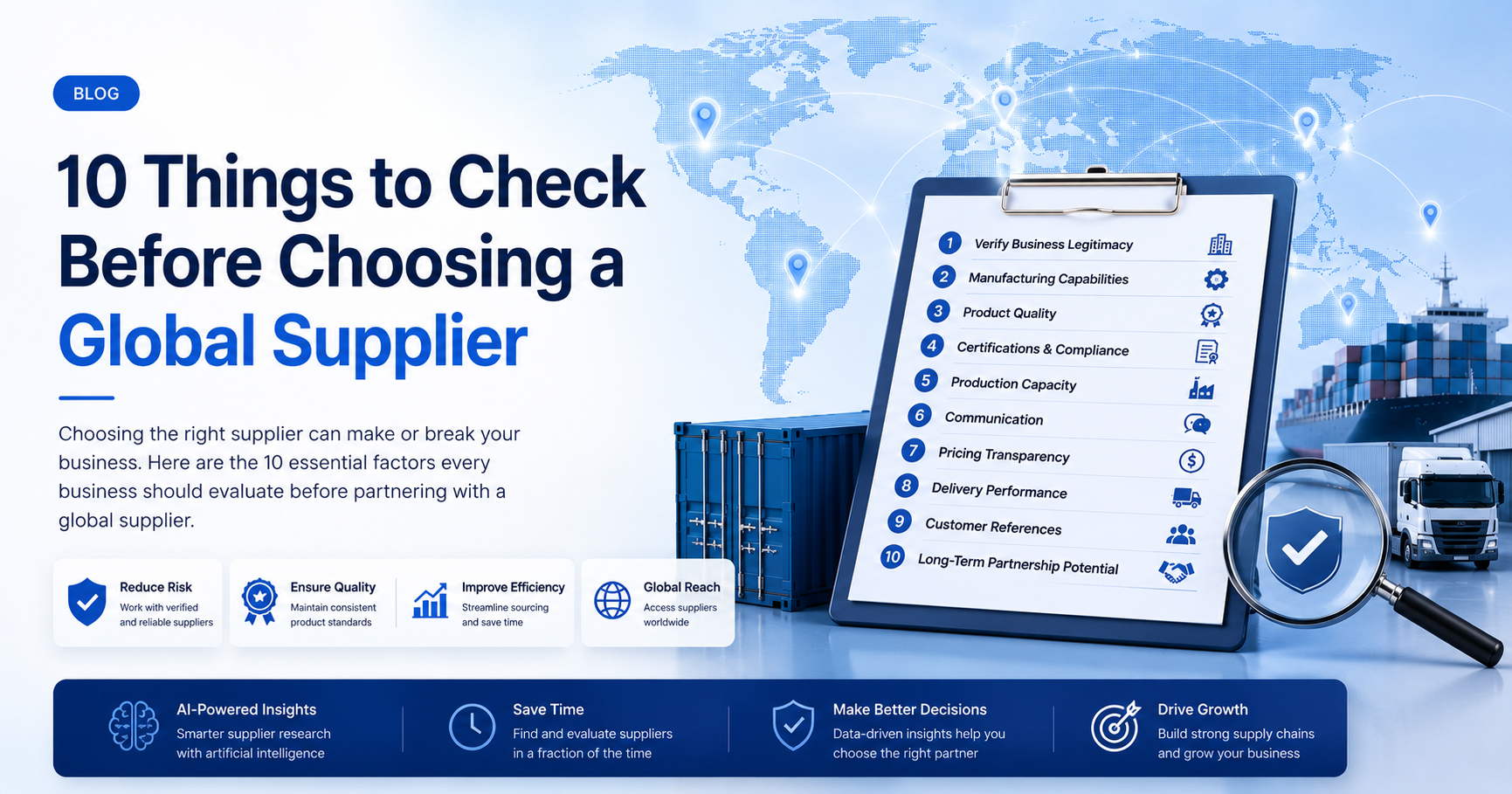
This guide highlights ten important factors every business should evaluate before selecting a global supplier.
1. Verify Business Legitimacy
Ensure the supplier is a legally registered business in its country.
Check for:
- Business registration
- Tax identification
- Company address
- Years in operation
- Official website
Working with verified businesses significantly reduces sourcing risks.
2. Manufacturing Capabilities
Understand whether the supplier actually manufactures the product or simply acts as a trading company.
Important questions include:
- What products do they manufacture?
- What machinery do they use?
- Do they offer customization?
- Can they produce at scale?
3. Product Quality
Quality should never be assumed.
Ask for:
- Product samples
- Quality inspection reports
- Testing certificates
- Material specifications
Consistent quality is essential for long-term partnerships.
4. Certifications and Compliance
Depending on your industry, suppliers may need certifications such as:
- ISO 9001
- CE
- RoHS
- FDA
- GMP
Always confirm certifications are valid and relevant to your market.
5. Production Capacity
A supplier that meets today's demand may struggle with tomorrow's growth.
Evaluate:
- Monthly production volume
- Factory size
- Number of employees
- Peak production capability
Scalable suppliers support long-term business growth.
6. Communication
Effective communication prevents costly misunderstandings.
Look for suppliers that:
- Respond quickly
- Communicate clearly
- Understand technical requirements
- Provide regular updates
Strong communication builds trust throughout the procurement process.
7. Pricing Transparency
The lowest price isn't always the best value.
Ask for a detailed quotation that includes:
- Unit price
- Packaging costs
- Tooling charges
- Shipping terms
- Minimum order quantities
Understanding the total cost helps avoid unexpected expenses.
8. Delivery Performance
Reliable delivery is critical for maintaining inventory and customer satisfaction.
Discuss:
- Production lead times
- Shipping options
- Historical delivery performance
- Backup production plans
Reliable suppliers consistently meet agreed schedules.
9. Customer References
Ask whether the supplier has worked with businesses similar to yours.
If possible, request:
- Client references
- Case studies
- Export history
- Industries served
Past performance often indicates future reliability.
10. Long-Term Partnership Potential
Choosing a supplier isn't just about the first purchase.
Consider whether the supplier can support:
- Product expansion
- Future innovations
- Higher production volumes
- Ongoing collaboration
The best suppliers become strategic business partners.
How AI Can Improve Supplier Evaluation
Modern procurement platforms use AI to organize supplier information, compare manufacturers, and simplify research.
Rather than reviewing dozens of supplier profiles manually, AI helps procurement teams identify suppliers that align with specific sourcing requirements, enabling faster and more informed decisions.
Final Thoughts
Selecting a global supplier requires careful evaluation beyond pricing alone. By assessing legitimacy, quality, production capacity, communication, and long-term potential, businesses can reduce risk and build stronger supply chains.
A structured supplier evaluation process leads to better procurement decisions and more resilient business relationships.
About Aeirex Trade AI
Aeirex Trade AI helps businesses discover suppliers, compare sourcing options, and make informed procurement decisions through AI-powered supplier intelligence and global trade insights.